How to Write and Maintain a Rent Ledger That Wins in Court

Essential Recordkeeping for Florida Landlords Pursuing Eviction In any Florida eviction case based on non-payment of rent, the rent ledger is your most important piece of evidence. Judges want to see exactly how much rent was owed, how much was paid, and how you applied each payment. A clear, consistent rent ledger can make the difference … Read more

How to Confirm a Tenant’s Non-Military Status Before Eviction: What Florida Landlords Need to Know

How to Confirm a Tenant’s Non-Military Status Before Eviction: What Florida Landlords Need to Know

If you’re pursuing an eviction and the tenant fails to respond or appear in court, Florida law allows you to seek a default judgment—but only after you confirm that the tenant is not an active-duty military member. This is a critical step in the eviction process, and many landlords are caught off guard by the requirement. Failing to properly confirm … Read more

Can You File a Lien Without a Written Contract in Florida?

In the fast-paced world of construction, not every deal is formalized in writing — especially on smaller jobs or when long-standing relationships are involved. But what happens when payment doesn’t come through? Can you still file a construction lien in Florida if your agreement was verbal? The short answer: Yes, you can — but only under certain … Read more

How to Legally Terminate a Business Contract in Florida

How to Legally Terminate a Business Contract in Florida

In business, not every deal works out. Whether a vendor fails to perform, a partner relationship turns sour, or economic conditions change, you may find yourself asking:Can I get out of this contract — without getting sued? The answer depends on the contract’s language, the circumstances, and how you handle the termination. In Florida, improper termination … Read more

Key Differences Between Commercial & Residential Evictions in Florida

Key Differences Between Commercial & Residential Evictions in Florida

Factor Commercial Evictions Residential Evictions Governing Law Lease contract + Florida Statutes, Chapter 83, Part I Florida Residential Landlord & Tenant Act (Chapter 83, Part II) Required Notice As stated in the lease, or reasonable notice Strict statutory notice periods (e.g., 3-day, 7-day, 15/60-day) Self-Help Eviction Sometimes allowed if specified in lease Strictly prohibited Tenant … Read more

Understanding Florida’s Eviction Notices: Which One to Use and When

As a landlord in Florida, knowing which eviction notice to serve—and when—is crucial for a smooth and legally compliant eviction process. Serving the wrong notice or failing to follow the proper procedures can lead to costly delays or even dismissal of your eviction case. This guide breaks down the different types of eviction notices in Florida, their … Read more

How Long Does an Eviction Take in Florida? Timeline and Key Factors

Evictions in Florida can be a quick process or a prolonged legal battle, depending on the tenant’s response, court availability, and whether the landlord follows proper procedures. Understanding the eviction timeline helps landlords plan accordingly and avoid unnecessary delays. This guide outlines each stage of the eviction process, estimated timeframes, and common factors that affect how long … Read more

A Landlord’s Guide to Florida Evictions: Process & Pitfalls

A Landlord’s Guide to Florida Evictions: Process & Pitfalls

Evictions can be a necessary but challenging part of property management in Florida. As a landlord, understanding the legal eviction process is crucial to protecting your investment while avoiding costly mistakes. This guide provides an overview of Florida’s eviction laws, the steps involved, and common pitfalls to avoid. Understanding Florida Eviction Laws Florida law strictly … Read more

How to Fill Out a 3-Day Notice for a Florida Residential Eviction

In Florida, landlords must serve tenants with a 3-Day Notice to Pay Rent or Vacate before filing for eviction due to non-payment of rent. This legal document notifies the tenant that they have three business days (excluding weekends and legal holidays) to either pay the past-due rent or move out. If the tenant fails to comply, the landlord can … Read more

Navigating Contractual Force Majeure and Common Law Defenses in Times of Crisis

In the wake of global disruptions like the COVID-19 pandemic, businesses and legal professionals are closely examining the interplay between contractual force majeure clauses and common law defenses such as impossibility and frustration of purpose. Understanding how these legal concepts interact is crucial for managing contracts during unforeseen events. Understanding Force Majeure Clauses Force majeure … Read more

Florida Eliminates Construction Licensing by Local Governments.

Passed in 2021, Fla. Stat. 163.211 eliminates local government’s ability to regulate and license specialty contractors (such as painters, flooring, landscapers, pavers and others whose work does not involve life safety implications.) Generally, the new licensing scheme eliminates the requriements for contractor’s to seek licensure from their local governments, and potentially eliminates the need for … Read more

Evictions: Residential Tenant Must Provide Supporting Documentation with Motion to Determine Rent

Fla. Stat. § 83.60 requires that “If a motion to determine rent is filed, documentation in support of the allegation that the rent as alleged in the complaint is in error is required. “  From this it is clear, that just a base allegation that the rent as alleged in the complaint is wrong, does not entitle Tenant to a … Read more

Eviction Law- Residential Tenant Files for Bankruptcy Protection

Despite Florida’s streamlined statutory framework for residential evictions, tenants maintain several tools to delay the eventual final judgment of eviction. A bankruptcy filing will delay an eviction process by the imposition of the automatic stay under 11 U.S. Code § 362. While inconvenient, the bankruptcy filing should only temporarily impede the eviction process. The Bankruptcy … Read more

Fla. Stat. 713.24 Lien Transfer to Cash by Interested Party Non-Owner, Are you obligated to increase security?

If a (non-owner) interested party (Contractor, Subcontractor) transfers to cash a lien placed on the Owner’s property, is that party perpetually obligated to increase security upon motion and order obtained by the foreclosing plaintiff for the pendency of the case. The law is unsettled, but seems to answer this question in the negative. Florida Law … Read more

DPBR Complaint: You received a Uniform Complaint. What do you do now?

The Division of Professional and Business Responsibility (DBPR) is the Florida agency responsible for regulating many licensed professionals through its multiple divisions including contractors, real estate professionals, architects, engineers, and much more. A member of the public can submit a Uniform Complaint form, or the Department may initiate a investigation. If the Department believes that … Read more

Corporations Need Attorneys to Obtain Writ of Possessions in Foreclosures and Evictions

If your rental property is owned in a corporate name, you may need an attorney to handle any contested eviction to evict a non-paying tenant. Even through Florida’s small claims rules permits representation of a corporate entity by an employee, if you are seeking possession of the rental property (eviction), that is not within the … Read more

Attorney Andrew Douglas Sworn in as Broward County Traffic Hearing Officer

FORT LAUDERDALE, FLORIDA – (December 28, 2018)  Andrew Douglas, P.A., proudly announces that on December 5, 2018 its principal attorney Andrew Douglas was sworn in as a Traffic Hearing Officer for the Seventeenth Judicial Circuit in and for Broward County, Florida. In addition to his litigation practice, Attorney Douglas will adjudicate traffic infraction matters at … Read more

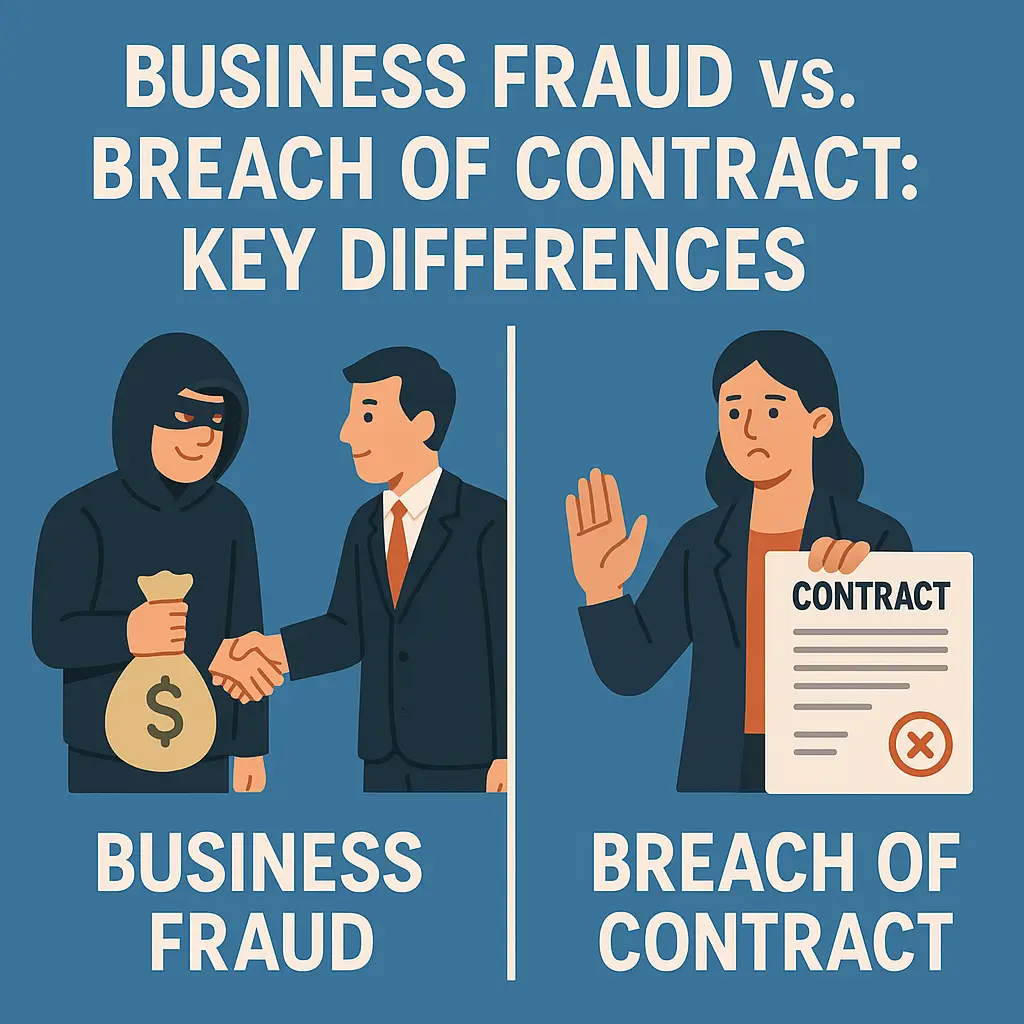
Fraud, Fraud in the Inducement, the Independent Tort Doctrine, and the Confusion in Florida Courts

Fraud in the context of contractual relationship brings with it a tricky set of issues that even some Florida Courts fail to fully understand and appreciate. Florida Courts acknowledge the long-standing independent tort doctrine which provides which states in relevant part from Indemnity Ins. Co. of North America v. American Aviation, Inc., 891 So.2d 532, 536-537 … Read more

Andrew Douglas P.A. Successfully Defends Felony Unlicensed Contracting Charge for Client

WESTON, FLORIDA – (July, 5, 2018) Andrew Douglas, P.A., is pleased to announce that it has successfully defended its client against a felony criminal charge of Unlicensed Contracting During a Declared State of Emergency (Engage in Contracting Violation During Existence of State of Emergency.) The State Attorney’s Office for the 15th Judicial Circuit, in and … Read more

Financially Responsible Officer Designation Not Available for Electrical Companies

(Need a Qualifier Agreement?, Go to our main qualifier agreement page for more infomation, Click Here!) Florida Statute 489.119 permits Construction Companies to designate a Financially Responsible Officer (FRO). This allows a construction company to bifurcate the construction responsibilities from the financial responsibilities of the company. This is used, generally, when a construction company utilizes … Read more

Residential Evictions: 7-Day Notices for Terminating Lease by Landlord for Causes other than Non-Payment of Rent

Terminating a lease for cause/lease breaches other than non-payment of rent is a little more involved than simple non-payment of rent, and this process starts with what is commonly known as the 7-Day Notice. It is called a 7-Day notice since such notice terminates the lease for NON-CURABLE VIOLATIONS within 7 days (not included legal … Read more

Residential Evictions in Florida: Step 1 – The 3-Day Notice

What is the 3-day Notice?  It is formally titled the NOTICE FROM LANDLORD TO TENANT–TERMINATION FOR FAILURE TO PAY RENT, but pursuant to statute it provides 3 (three) days for the tenant to pay the rent owed. Accordingly, it is commonly referred to as the 3(THREE) DAY NOTICE. The 3-day notice shall contain a statement … Read more

Construction Contracting: Contractors Can Contract for Limited Work Outside Scope of License

Contractors Can Contract for Limited Work Outside Scope of License Florida Statute 489.113 specifically allows for licensed general contractors to contract for a limited scope of work outside of their licensure provided the majority of the work to be performed under the contract is within the licensure. A properly licensed contractor must still perform the work,( … Read more

Florida Lien Law: Liens and Leases

Can lienors that perform work on a construction project under a contract with a lessee (tenant) foreclose on the Owner’s interest? Quick Answer: It depends. The not so quick answer starts with a basic rule and continues with exceptions, all found in Fla. Stat. 713.10. Basic Rule: 713.10 (1) Except as provided in s. 713.12, … Read more

Construction Contracting: Prohibited Practices “Rent-a-License”

An unlicensed handyman pulls a permit using a friends contracting license. This happens all the time. Its unlawful, and most important, when it happens, the homeowner will not have to pay for the work. However, many handymen (read unlicensed person) think they are acting lawfully, and even diligently, by having a properly licensed professional pull the … Read more

Construction Contractors: Qualifying Agent Responsibilities

(Need a Qualifier Agreement?, Go to our main qualifier agreement page for more infomation, Click Here!) To “qualify a business” means the contractor has agreed to accept full responsibility for the business, including financial transactions, signing permits, and supervising all jobs the business participates in. If you are the primary qualifying agent, you are responsible … Read more

Construction Companies: Secondary Qualifying Agent

(Need a Qualifier Agreement?, Go to our main qualifier agreement page for more infomation, Click Here!) What is a Secondary Qualifying Agent? A secondary qualifying agent is responsible only for: 1. The supervision of field work at sites where his or her license was used to obtain the building permit; and 2. Any other work … Read more